How to swing a golf club: simple fundamentals & helpful training aids
The golf swing can look incredibly complicated—slow-motion replays, swing analyzer apps, and a thousand “secret” tips.
In reality, most solid swings share a few basic fundamentals: a decent grip, balanced setup, and rhythm you can repeat.
On this page we’ll walk through a simple, step-by-step way to think about the golf swing, then show
some highly rated swing training aids from Amazon that can help you groove those moves at home
or on the range.
Some links on this page are affiliate links. If you buy through them, we may earn a small commission at no extra cost
to you. It helps keep Reach The Green up and running.
Step 1: Get the basics right (grip, stance, posture)
Before you think about “lag” or “hip turn,” your hands, feet, and posture need to be in the ballpark. If those are
way off, the swing becomes a collection of compensations.
Grip
Hold the club mainly in your fingers, not your palms. Your lead hand (left for right-handers) should see 2–3
knuckles when you look down, and both “V” shapes made by your thumb and index fingers should point roughly
between your trail shoulder and chin. If you’re unsure, start with our
guide to gripping a golf club.
Stance
Feet about shoulder-width apart for mid-irons, a bit wider for driver, slightly narrower for wedges. Weight
balanced between the balls of your feet—not back on your heels or way out on your toes.
Posture
Tilt forward from the hips with a straight-ish back, let your arms hang naturally, and soften your knees. You
should feel athletic and ready to move, not locked or hunched.
If your setup looks decent in a mirror or phone video, everything that follows becomes easier to repeat.
Golf swing training aids (tempo, plane & speed)
You don’t need a garage full of gadgets, but a good swing trainer can make practice much more
efficient. From our Amazon feed we pulled products that are clearly golf swing training aids:
tempo sticks, swing plane trainers, impact bags, and swing speed tools.
A few standout swing trainers
These sit near the top of our feed by rating. Each one is designed to help with a different piece of the swing
(tempo, path, or speed).
Training aid
Rating
Price*
Link
SKLZ Golf Swing Trainer and Warm Up Tool- Essential Golf Accessories for Golfers, Increase Swing Speed, Distance, Balance and Grip Strength
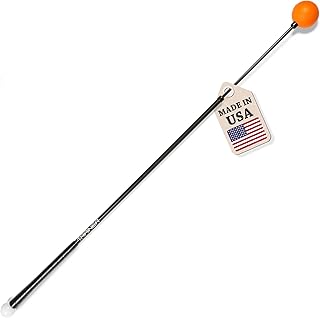
WATSON | GOLF theHANGER™ Official Golf Training Aid, Golf Swing Aid Helps Golfers Achieve Clubface Control to Eliminate Hooks and Slices (Made in The USA)
Rating: 3.9 ★
(1128 reviews)
$64.95
$79.95
Look for notes on whether it trains tempo, swing plane, speed, or all of the above, and whether you
can use it indoors.
HH-GOLF Golf Swing Speed Trainer Golf Training Aid and Correction for Strength Golf Warm-up Stick Tempo Flexibility Training Club, with 3 Different Weights
Rating: 4.3 ★
(507 reviews)
$27.99
$34.99
Look for notes on whether it trains tempo, swing plane, speed, or all of the above, and whether you
can use it indoors.
GolfForever Swing Trainer – Golf Training & Fitness System for Strength, Flexibility & Swing Power – Includes 30-Day Membership & Training Bar for Golf-Specific Workouts
Rating: 4.4 ★
(426 reviews)
$139.99
$199.99
Look for notes on whether it trains tempo, swing plane, speed, or all of the above, and whether you
can use it indoors.
You can describe the golf swing in a hundred different ways. Here’s a simple version that works for most clubs:
Setup: Good grip, balanced stance, and athletic posture. Aim the clubface where you want the ball
to start, then align your body parallel to that line.
Takeaway: Start the club back low and slow, keeping the clubhead just outside your hands and the
clubface roughly matching your spine angle. Think “one piece” motion with your chest and arms.
Backswing: Turn your shoulders while your hips rotate a bit. Let your arms swing up so your lead
arm stays across your chest, not behind your head. Stay in balance—no swaying off the ball.
Transition: Start the downswing from the ground up. Pressure shifts toward your lead foot as your
hips begin to rotate, then your torso, then your arms and club follow.
Downswing & impact: Maintain your posture as you rotate. The club approaches the ball from
slightly inside the target line, with the shaft leaning a bit toward the target for irons. For driver, the ball is
forward and you’re catching it a bit more on the upswing.
Follow-through: Keep turning your body through the shot until your chest faces the target and
your weight is mostly on your lead side. If you can hold your finish, you were probably in balance.
It sounds like a lot, but with a repeatable setup and some good tempo work, most of this begins to happen more
automatically than you’d think.
Step 3: Simple swing drills you can repeat
Here are a few no-nonsense drills that pair nicely with common swing training aids:
Feet-together swings (balance & rhythm). Hit small shots with your feet almost touching. If
you swing too hard or out of sync, you’ll lose balance. Great warmup drill that doesn’t need any gadgets.
Towel-under-arms drill (connection). Place a small towel or headcover under both armpits and make
half swings. This helps your arms and body move together instead of your arms “lifting” away on their own.
Tempo trainer swings. With a weighted or flexible swing trainer, make 10–15 smooth swings focusing
on a “1-2-3” rhythm: 1 back, 2 at the top, 3 through the ball. You can then try to copy that feel with your normal club.
Impact bag drill. Using an impact bag, make half swings and “thump” the bag with a square face and
hands slightly ahead (for irons). This teaches solid contact without needing to chase ball flight.
Plane / path gate. Set tees or foam obstacles just outside the toe and inside the heel of the club
at address. Make swings that miss both. Many swing plane trainers use a similar concept with rails or slots.
A few focused reps with these drills beats a whole bucket of balls where you’re just firing at random targets.
Step 4: Build a simple weekly practice plan
You don’t need a tour-level schedule. Something like this is more than enough for most golfers:
2–3 short sessions at home (15–20 minutes) with a swing trainer or mirror.
1 range session focused on contact and starting the ball on line—not just max distance.
At least one putting/short game session, since that’s where your scorecard really lives.
Over time, this kind of consistent, focused practice does more for your
average golf score than occasional marathon range days.
Golf swing FAQ
Should I start with full swings or half swings?
Half swings are usually best. They simplify the motion, help you find the center of the clubface, and keep you in
balance. Once you can hit solid half shots on purpose, extending to fuller swings is much easier.
What’s more important—speed or solid contact?
Solid contact wins early on. A pure 7-iron beats a mishit driver almost every time. Once you’re hitting it in the
middle of the face regularly, then speed trainers and longer swings make more sense.
How do I know if I’m swinging “on plane”?
Video from down-the-line (behind you, looking toward the target) helps, as do swing plane training aids and gates.
If the club is returning to the ball from roughly the same angle it started, and you’re not carving big slices or
hooks, you’re probably close enough for now.
Can I learn the swing without a coach?
You can make progress with good information and training aids, but a lesson or two from a teaching pro can save you
a lot of time. Think of training aids as tools that help you keep making those lesson changes correctly between visits.