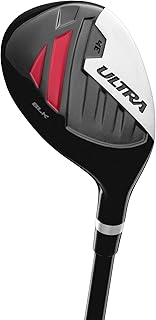
How to tee off: simple tips for a solid opening tee shot
The first tee is where golf and psychology meet. New group watching, starter hovering, fairway looking about three
yards wide—it’s no wonder so many opening tee shots go straight into the trees.
The good news: a good tee shot isn’t about perfection, it’s about starting the ball in play with a
swing you can repeat. This page covers club selection, setup, routine, and mindset for better tee
shots, plus highly rated accuracy-focused drivers, woods, and hybrids from Amazon if you’re looking
for gear that forgives more than it punishes.
Some links on this page are affiliate links. If you buy through them, we may earn a small commission at no extra
cost to you. It helps keep Reach The Green up and running.
Step 1: Pick the right club (not just “hit driver”)
The first mistake many golfers make is automatically reaching for driver on every tee. Instead, start by asking:
“What club can I keep in play most often right now?”
Driver
Best when the hole is wider, you have room for a miss, and you're reasonably comfortable with the club.
Accuracy-focused drivers with higher MOI, draw bias, or forgiving faces can be great options here.
Fairway wood (3/5-wood)
Great choice when the hole is tighter or trouble sits at your driver distance. You'll usually give up some
yardage but gain control and confidence.
Hybrid
Underrated weapon off the tee. Hybrids are easier to launch than long irons and can be deadly accurate for
shorter par 4s and long par 3s.
If your goal is a better average golf score, it's often smarter to play the tee
shot that leaves you in the fairway—even if it's 20–30 yards farther back.
Accuracy-focused drivers, woods & hybrids
From our Amazon feed we pulled drivers, fairway woods, and hybrids you'd realistically tee off with,
then filtered out everything else. These clubs often emphasize forgiveness, stability, or draw bias
to help keep more tee shots in play.
A few standout options
These sit near the top of our feed by rating. Think of them as reference points for what forgiving & modern
tee clubs look like.
Club
Rating
Price*
Link
LAZRUS GOLF Premium Hybrid Golf Clubs for Men - 2,3,4,5,6,7,8,9,PW Right Hand & Left Hand Single Club, Graphite Shafts, Regular Flex
Step 2: Set up like you're giving yourself a chance
A lot of “bad swings” are just bad setups. If you aim poorly or stand in the wrong place, the swing you make is
already working from behind.
Pick a small target. Instead of “somewhere in the fairway,” choose a specific tree, bunker
edge, or distance marker. Small targets sharpen your focus.
Use an intermediate spot. On the ground a few feet in front of your ball, pick a blade of grass
or discolored patch on the line to your target. Aim your clubface at that, then align your body parallel to it.
Ball position. With driver, play the ball just inside your lead heel. With fairway woods and
hybrids off a tee, move it slightly back toward center but still forward of your sternum.
Balance. Feel your weight in the balls of your feet, not heels. You should be able to tap your
toes without falling over.
Relax your grip pressure. Think “firm enough not to let it fly, soft enough to stay loose.”
Strangling the club is a good way to hit a panicked pull or slice.
If your setup is solid, your swing doesn't have to be perfect to produce something playable.
Step 3: Build a simple pre-shot routine for the tee
A good routine takes your brain out of panic mode and puts you into “do the same things in the same order”
mode. Here's a simple one you can adapt:
Stand behind the ball. Pick your small target and picture the ball flying there.
Choose your club. Commit—no second guessing once you're over the ball.
Walk in and aim the face. Set the clubface square to your intermediate spot first.
Set your stance and posture. Build your setup around the clubface, then check ball position.
One or two waggles / looks. Final look at the target, feel the swing, and go.
Try to make the time between your last look at the target and starting the swing the same for every tee
shot. That consistency is huge for rhythm.
Step 4: Handling first-tee nerves
Nerves on the first tee are normal—even tour players feel them. The goal isn't to eliminate nerves, it's
to give them something productive to do.
Pick a "fairway finder" club. If you're nervous, use the most accurate tee club you own, not the longest.
Lower your expectations. Your first swing of the day doesn't need to be perfect; it just needs to be playable.
Breathe and move. Deep breath, small waggle, relaxed shoulders. Tension is accuracy’s worst enemy.
Have a stock shot. Aim for the shot shape you hit most often (even if it's a fade or draw you don't love) and allow for it.
Remember: everyone is thinking about their own swing. The group behind you isn't memorizing your tee shot.
A simple rule: half the ball above the top of the driver at address. Too low and you'll tend to hit down and
lose distance; too high and you're more likely to pop it up. For fairway woods and hybrids, tee it just high
enough to avoid scraping the ground at impact.
Is it okay to aim away from trouble instead of straight at the fairway center?
Absolutely. If there's water left and your miss is usually left, aim farther right and play for your typical
shot shape. Smart aim beats “hero golf” most of the time.
How hard should I swing on the first tee?
Think 80–90% effort. A smooth, balanced swing that finds the middle of the face usually travels farther—and bounces
less into trouble—than a wild lash at 110%.
Will new clubs automatically fix my tee shots?
New gear can help, especially if you're moving into something more forgiving or better fit. But the biggest
gains usually come from better setup, smarter club selection, and a consistent routine. Use
equipment changes to support those habits, not replace them.